What Are Digital Solutions and How Can They Help Your Business Scale?

1. Introduction

Adopting comprehensive digital solutions plus modern technology frameworks enables growing businesses to streamline operations and expand market reach predictably. As traditional business models face increased competition and shifting consumer expectations, relying on manual processes or fragmented tools creates severe growth bottlenecks. Today, scaling your business requires a unified digital approach that connects customer acquisition, web experiences, and operational workflows. Leveraging comprehensive digital business solutions allows organizations to build scalable systems that drive sustained profitability.
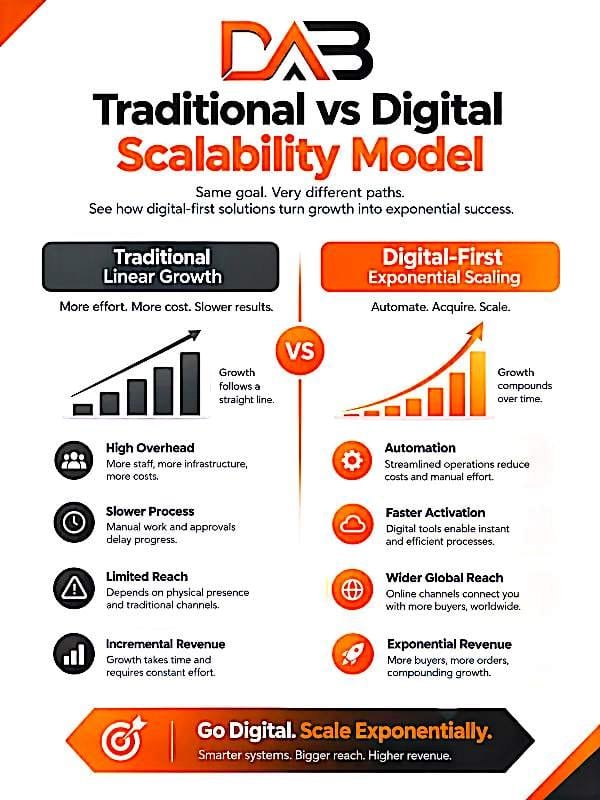
Infographic comparing Traditional vs Digital Scalability Model by DAB - Traditional linear growth with high overhead, slower process, limited reach, incremental revenue vs Digital-First exponential scaling with automation, faster activation, wider global reach, exponential revenue. Go Digital Scale Exponentially.

2. What Are Digital Solutions?

Digital solutions refer to the strategic integration of software applications, web technologies, data analytics, and online marketing channels to solve core business challenges. Rather than treating technology as individual standalone tools, modern digital solutions unite digital channels into a cohesive growth engine.

These solutions enable businesses to automate routine tasks, capture valuable operational data, and deliver seamless interactions across every customer touchpoint.

Key objectives of modern digital solutions include:

  • Process Automation: Eliminating manual data entry and repetitive workflows to lower administrative costs.
  • Customer Acquisition: Utilizing search engines, content, and paid advertising to attract high-intent buyers continuously.
  • Enhanced User Experience: Building fast, intuitive digital interfaces that convert casual visitors into loyal clients.
  • Data-Driven Decision Making: Leveraging real-time analytics to optimize resource allocation and strategic investments.

By modernizing core systems, businesses transition from reactive problem-solving to proactive, scalable growth.

3. Core Types of Digital Solutions for Modern Businesses

To scale effectively, companies must implement solutions tailored to their specific industry requirements and operational goals.

The primary categories of digital business solutions include:

  1. Digital Marketing & Search Visibility: Search Engine Optimization (SEO), Pay-Per-Click (PPC) advertising, and social media campaigns that generate consistent inbound leads.
  2. Web Design & Application Development: High-performance websites and custom web applications optimized for conversion, usability, and speed.
  3. Customer Relationship Management (CRM): Centralized platforms that track customer interactions, manage sales pipelines, and improve account retention.
  4. Cloud Infrastructure & Process Automation: Scalable cloud platforms that support remote collaboration, secure data storage, and automated business workflows.

Combining web infrastructure with professional web design and development ensures your brand creates a powerful first impression that drives measurable conversions.

4. How Digital Solutions Help Your Business Scale

Scaling a business means growing revenue at a faster rate than operating costs. Without digital infrastructure, expanding your client base usually requires adding proportional staff and overhead, limiting profit margins.

Digital solutions unlock non-linear growth through efficiency and market reach:

  • Unlocking Geographical Expansion: Digital channels allow businesses to reach regional, national, and global markets without opening physical branch locations.
  • Lowering Customer Acquisition Costs (CAC): Targeted search and content marketing attract qualified leads at a fraction of traditional outbound sales costs.
  • Improving Operational Speed: Automated invoicing, inventory sync, and client onboarding reduce service delivery turnaround times.
  • Maximizing Customer Lifetime Value (LTV): Automated email workflows and retargeting campaigns keep existing clients engaged, increasing repeat sales.

Implementing end-to-end digital growth solutions transforms your business into an agile, highly competitive market leader.

Business Scalability Comparison

Growth MetricTraditional ModelDigital-First ModelImpact on Business
Market ReachLimited to local coverageGlobal online accessibilityExponential customer base growth
Lead GenerationManual networking & printAutomated organic & paid channelsConsistent inbound lead flow
Service SpeedManual labor hoursAutomated workflows & self-serviceFaster turnaround with fewer errors
Data VisibilityDelayed monthly reportingReal-time interactive dashboardsImmediate campaign & cost optimization
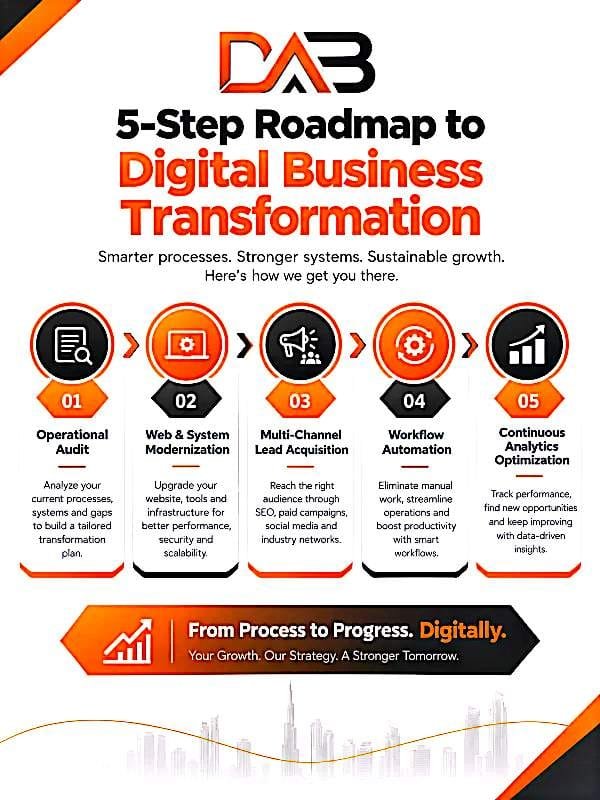
Infographic by DAB - 5-Step Roadmap to Digital Business Transformation - Steps: 01 Operational Audit, 02 Web & System Modernization, 03 Multi-Channel Lead Acquisition, 04 Workflow Automation, 05 Continuous Analytics Optimization. Tagline: Smarter processes. Stronger systems. Sustainable growth

5. Key Components of an Effective Digital Growth Strategy

Implementing digital solutions requires an intentional roadmap to ensure maximum return on investment.

Essential components of a successful digital growth engine include:

  • Search Engine Optimization (SEO): Aligning your web assets with buyer search intent using specialized SEO services to capture continuous organic search traffic.
  • High-Converting Web Architecture: Ensuring fast page speed, mobile responsiveness, and clear calls-to-action that capture user interest.
  • Performance Paid Media: Utilizing targeted PPC management campaigns to generate immediate, high-intent lead volume.
  • Inbound Content Marketing: Educating prospective clients through authoritative articles, whitepapers, and guides supported by content marketing services.
  • Automated Lead Nurturing: Deploying automated campaigns via email marketing services to convert leads into active account clients over time.

6. Overcoming Common Challenges in Digital Transformation

While the benefits of digital solutions are clear, businesses often encounter hurdles during implementation.

Common challenges and strategic solutions:

  • Resistance to Change: Overcome team hesitation by providing clear training and highlighting how automation reduces tedious workloads.
  • Tool Fragmentation: Avoid disjointed software setups by choosing integrated platforms that sync data seamlessly across departments.
  • Unclear ROI Strategy: Partner with digital marketing experts who establish clear KPIs and transparent performance dashboards from day one.

Addressing these friction points early ensures a smooth digital transformation that delivers long-term organizational value.

7. Measuring the Success of Your Digital Solutions

To evaluate performance and guide future investments, monitor metrics that reflect genuine business growth.

Key performance indicators to track:

  • Conversion Rate: The percentage of website visitors who complete a desired lead form, quote request, or purchase.
  • Cost Per Acquisition (CPA): Total digital strategy spend divided by the number of acquired paying customers.
  • Organic Search Traffic Growth: Incremental increase in high-intent prospective buyers visiting your website via search engines.
  • Return on Ad Spend (ROAS): Revenue generated directly from paid digital advertising investments.

Regularly auditing these metrics ensures your digital ecosystem remains optimized for continuous revenue scaling.

8. Key Takeaways

  • Digital solutions combine web software, automation, and digital marketing into a unified growth engine.
  • Scaling efficiently requires growing revenue faster than operational overhead through automated workflows.
  • Combining professional web design with targeted SEO and PPC creates a consistent lead generation pipeline.
  • Clear KPIs and real-time performance tracking are essential for measuring digital marketing ROI.
  • Partnering with full-service digital experts ensures seamless software integration and predictable market scaling.
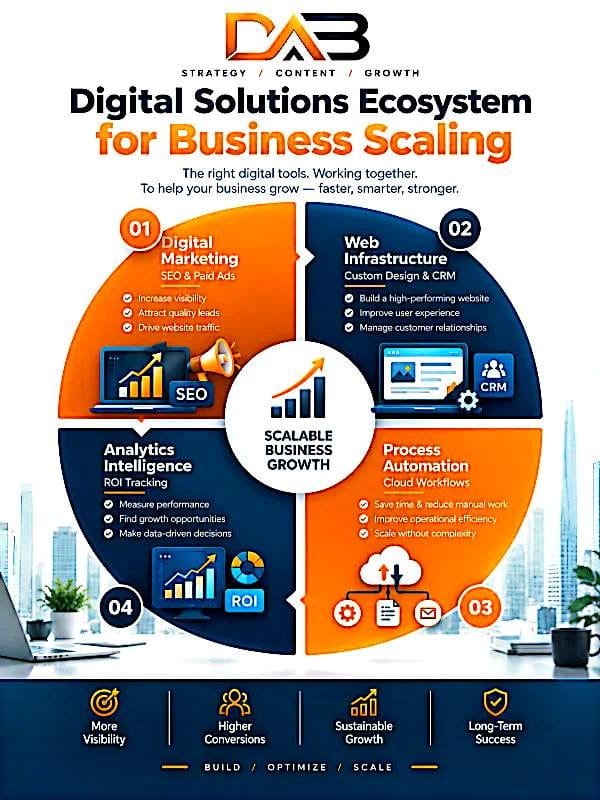
Infographic by DAB - Digital Solutions Ecosystem for Business Scaling - 4 pillars: 01 Digital Marketing SEO & Paid Ads, 02 Web Infrastructure Custom Design & CRM, 03 Process Automation Cloud Workflows, 04 Analytics Intelligence ROI Tracking. Center text Scalable Business Growth.

9. Frequently Asked Questions (FAQs)

  1. What is the definition of digital solutions for businesses?
    Digital solutions encompass integrated software systems, web platforms, and digital marketing strategies designed to automate workflows, attract buyers, and scale business operations.
  2. How do digital solutions help a small business scale?
    They allow small businesses to compete with larger organizations by automating customer acquisition, lowering operating costs, and reaching national audiences online.
  3. What is the difference between digitization and digital transformation?
    Digitization is converting physical information into digital formats, whereas digital transformation uses digital solutions to fundamentally improve business operations and customer experiences.
  4. Which digital marketing channels offer the fastest growth for businesses?
    Pay-Per-Click (PPC) ads deliver immediate targeted traffic, while Search Engine Optimization (SEO) provides the highest sustainable, long-term ROI.
  5. Why is professional web design critical for digital business solutions?
    Your website is your central digital sales hub; professional web design ensures fast performance, mobile compatibility, and optimal conversion rates for incoming leads.
  6. How long does it take to see results from implementing digital solutions?
    Paid advertising and web updates yield immediate improvements within weeks, while organic SEO and content marketing build compounding value over 3 to 6 months.
  7. How can a business select the right digital solutions partner?
    Choose a full-service provider with verified expertise across web design, SEO, paid media, and strategic growth modeling tailored to your specific industry goals.

Digital Marketing for Distributors: How to Reach More Buyers Online

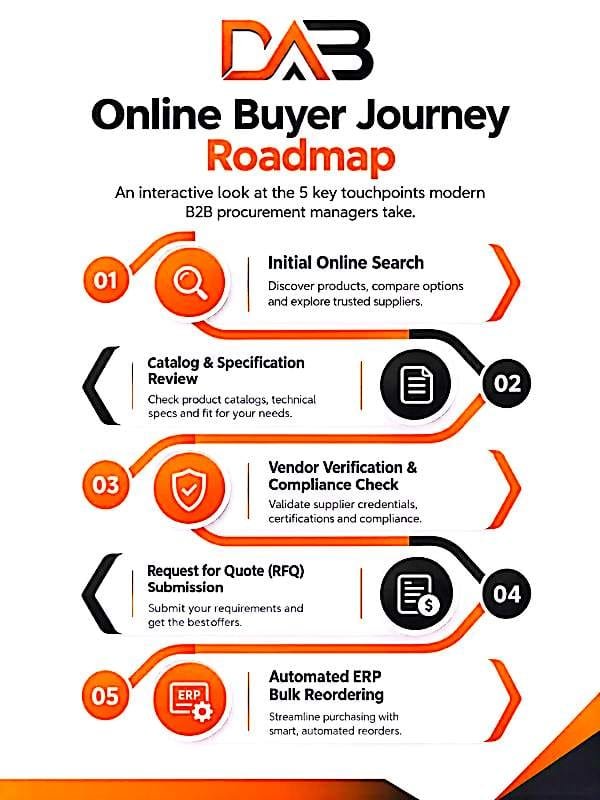
Implementing a tailored strategy for digital marketing for distributors allows wholesale businesses to connect with modern online buyers before competitors even get a call. Modern B2B procurement professionals conduct extensive digital research prior to reaching out to sales representatives. Distribution companies that rely exclusively on traditional cold calls or trade shows risk losing market share to agile digital competitors. By establishing a robust online presence, wholesale suppliers turn their digital channels into consistent revenue drivers. Partnering with industry-specific digital marketing experts helps distributors modernise their customer acquisition model.

Infographic showing 5 steps of online buyer journey roadmap from initial online search to automated ERP bulk reordering for B2B procurement managers

Why Digital Marketing Matters for Distributors

The B2B purchasing landscape has undergone a permanent shift over recent years. Modern procurement managers and commercial buyers expect the same speed, convenience, and transparency online that they experience as retail consumers.

Digital channels enable distribution businesses to overcome geographical restrictions and expand into new commercial markets efficiently.

Here is why digital transformation is essential for wholesale growth:

  • Changing Buyer Demographics: Over 70% of B2B purchasing decisions are made by tech-savvy managers who research suppliers online first.
  • 24/7 Catalog Visibility: An optimized digital presence showcases product availability, technical specifications, and tier pricing constantly.
  • Sales Team Enablement: Qualified digital leads allow sales teams to spend less time prospecting and more time closing high-value accounts.
  • Measurable ROI: Unlike traditional offline advertising, digital marketing for B2B businesses offers precise tracking for every campaign dollar spent.

Without an intentional digital strategy, distribution companies remain invisible to buyers actively searching for immediate inventory solutions.

Best Digital Marketing Strategies for Distribution Businesses

A successful distributor marketing strategy requires a multi-channel approach aligned with B2B buying cycles. B2B buyers require detailed technical specifications, bulk ordering details, and proof of logistics reliability before placing an initial contract order.

Key strategies that form a complete distributor growth engine include:

  1. Search Engine Optimization (SEO): Captures high-intent buyers seeking specific SKUs or wholesale suppliers.
  2. Targeted Paid Advertising: Delivers immediate visibility for high-margin product lines across search and professional networks.
  3. Inbound Content Marketing: Educates buyers with whitepapers, spec sheets, and inventory guides.
  4. Account-Based Email Marketing: Nurtures prospective purchasing managers through automated drip campaigns.
  5. Conversion Rate Optimization: Converts anonymous site visitors into active wholesale account applicants.

Integrating these channels ensures your distribution business stays visible across every stage of the buyer journey. Combining organic visibility with structured PPC advertising services accelerates overall account acquisition.

SEO for Distribution Businesses

Search engine optimization provides the foundation for long-term distributor lead generation. When prospective clients search for bulk suppliers, specialized parts, or wholesale distributors, high search engine visibility ensures your website appears first.

Implementing specialized SEO for distribution businesses involves organizing your site architecture around buyer search intent. Categorize product lines clearly, build dedicated landing pages for major SKU categories, and publish comprehensive technical documentation.

Key components of B2B SEO include:

  • Keyword Targeting: Target high-intent transactional terms like wholesale industrial valve supplier or bulk electrical component distributor.
  • Technical SEO: Optimize site architecture, internal linking, and load speeds to support thousands of product SKU pages.
  • Local SEO Optimization: Ensure your regional warehouses and fulfillment centers rank prominently in localized map packs.

Implementing localized optimization through professional local SEO services guarantees dominance in regional supply territories.

Distribution Channel Comparison

ChannelObjectiveTimelineKey Advantage
Search Engine Optimization (SEO)Organic SKU capture3 to 6 MonthsHigh long-term ROI and sustainable search dominance
Pay-Per-Click (PPC) AdsImmediate buyer inquiries1 to 30 DaysRapid visibility for high-margin product lines
Content MarketingBuyer education & trust1 to 3 MonthsEstablishes domain authority and buyer confidence
Email MarketingAccount retention & reordersOngoingHigh-margin repeat bulk sales automation
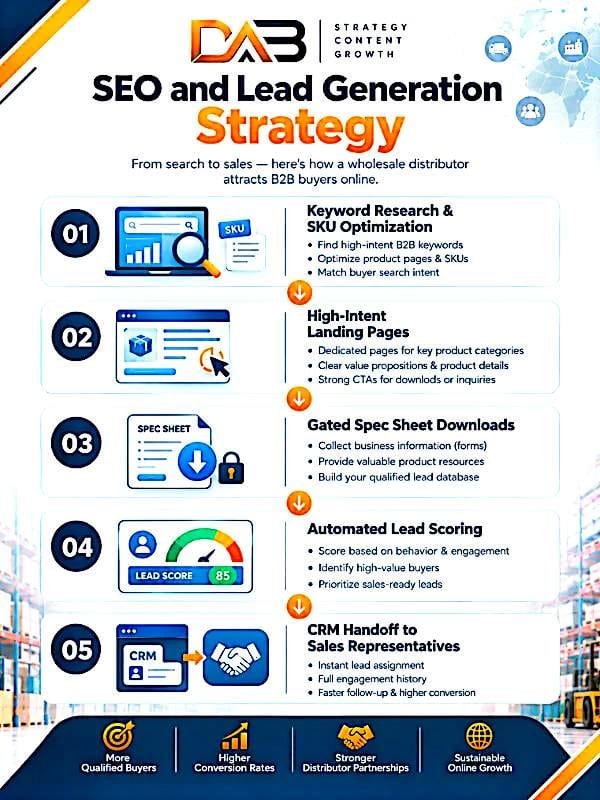
Infographic showing 5-step SEO and lead generation strategy for wholesale distributors including keyword research landing pages and CRM handoff

Content and Lead Generation

Content marketing transforms passive site visitors into qualified B2B leads. Commercial procurement teams require extensive documentation before committing to new distribution partners.

High-converting content formats for distribution marketing include:

  • Downloadable product specification sheets and dimensional CAD files.
  • Wholesale pricing guides and bulk discount structure breakdowns.
  • Industry compliance documentation and material safety data sheets (MSDS).
  • Comprehensive comparison guides comparing OEM and aftermarket components.

Pairing informative resources with structured content marketing services establishes authority across complex commercial sectors.

Automated email marketing services allow wholesale suppliers to follow up consistently with prospective purchasing leads.

Paid Advertising and Buyer Acquisition

While organic strategies build long-term value, paid advertising delivers immediate inbound opportunities. Pay-Per-Click (PPC) campaigns allow distributors to appear directly above organic results for high-value buyer search queries.

Effective paid media options for distributors:

  • Google Search Ads: Target commercial search terms capturing buyers with immediate purchasing intent.
  • LinkedIn Sponsored Content: Reach specific procurement titles, job functions, and company sizes directly.
  • Google Shopping / Performance Max: Display product photos, part numbers, and stock status directly in search results.

Combining paid search with strategic social media marketing services keeps your distribution brand top-of-mind across professional networks.

Website and Conversion Optimization

Your website functions as your primary digital sales portal. If prospective buyers struggle to navigate product catalogs or request quotes, they will quickly switch to a competitor.

Modern B2B distributor websites require:

  • Fast Mobile Performance: Ensure procurement agents can easily look up parts from job sites on mobile devices.
  • Streamlined Quote Requests: Replace lengthy contact forms with simple 1-click Request for Quote (RFQ) tools.
  • Clear Account Registration: Allow commercial clients to easily apply for wholesale credit accounts.

Upgrading your site via professional web design creates a frictionless experience that boosts conversion rates significantly.

Working alongside experienced digital marketing experts for your industry ensures your site layout maximizes incoming buyer inquiries.

Measuring Digital Marketing ROI

To scale your distribution marketing successfully, track actionable performance metrics that impact your bottom line.

Crucial metrics to track:

  • Cost Per Lead (CPL): Total marketing cost divided by inbound RFQs or account applications.
  • Customer Acquisition Cost (CAC): Total spend required to onboard a new active wholesale buyer.
  • Average Order Value (AOV): Growth in initial bulk purchase amounts.
  • Customer Lifetime Value (LTV): Overall revenue generated over years of recurring wholesale orders.

Reviewing performance analytics allows your business to reallocate budget toward top-performing channels continuously.

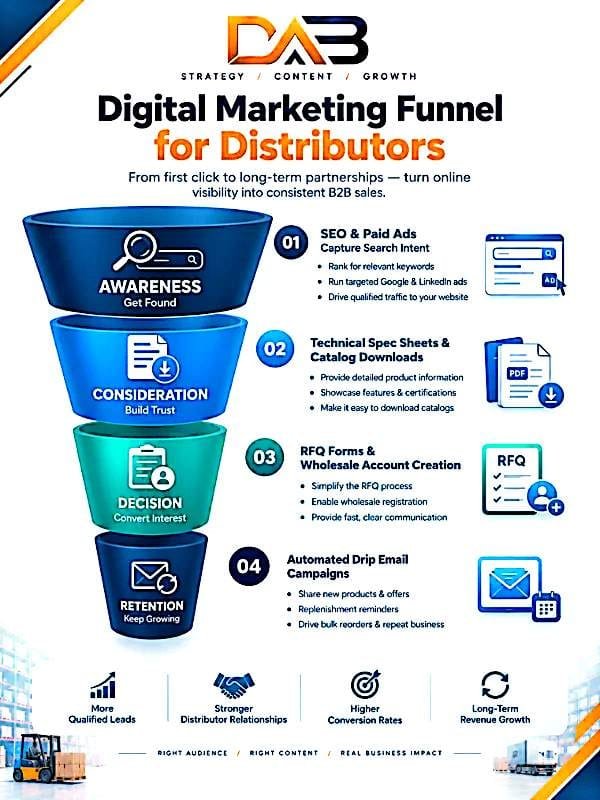
Digital marketing funnel infographic for distributors showing 4 stages awareness consideration decision retention from SEO to automated email campaigns

Key Takeaways

  • B2B buyers complete most research online before contacting wholesale representatives.
  • Comprehensive SEO captures high-intent searches for specific parts, categories, and inventory supplies.
  • Gated content like spec sheets and pricing guides turns anonymous visitors into qualified leads.
  • Targeted Google Ads and LinkedIn campaigns deliver immediate visibility for high-margin products.
  • A fast, user-friendly website with simple RFQ forms maximizes conversion rates.

Frequently Asked Questions (FAQs)

  1. How does digital marketing for distributors differ from B2C marketing?
    Distributor marketing focuses on long sales cycles, multi-person decision units, bulk pricing structures, and technical specifications, unlike high-volume B2C impulse sales.
  2. Which digital marketing channel yields the highest ROI for wholesale distributors?
    SEO combined with targeted email marketing consistently delivers the highest long-term return on investment for distribution companies by capturing organic search demand.
  3. How long does it take to see results from distributor SEO campaigns?
    While paid search offers immediate inquiries, comprehensive SEO campaigns typically demonstrate significant lead growth within 3 to 6 months.
  4. Should wholesale distributors display prices openly on their website?
    Displaying tier pricing or requiring account login for bulk discounts protects margins while encouraging prospective online buyers to register as leads.
  5. How can social media benefit B2B distribution businesses?
    Platforms like LinkedIn allow distributors to build brand authority, target specific procurement managers, and share corporate inventory updates.
  6. What is the role of content marketing in B2B lead generation?
    Content marketing educates buyers with spec sheets, case studies, and comparison guides, lowering buyer risk and increasing account sign-ups.
  7. Why is local SEO critical for regional distributors?
    Local SEO ensures your regional fulfillment centers appear prominently in Google Map Packs when local buyers search for immediate regional stock.

B2B Marketing Blog: Proven Strategies That Generate Real Leads

Building a successful B2B marketing blog requires moving past generic industry updates and focusing directly on buyer intent and business value. Modern business decision-makers demand in-depth insights, actionable solutions, and clear proof before engaging with sales teams. Companies that align their blogging strategy with actual decision-maker pain points consistently turn organic traffic into qualified leads. This guide explores proven frameworks for creating, distributing, and optimizing B2B content that drives measurable sales pipeline growth.

What Is a B2B Marketing Blog and Why Does It Matter?

A B2B (business-to-business) marketing blog is an informational publishing asset designed to educate prospective enterprise clients, address operational challenges, and demonstrate industry authority. Unlike consumer-focused blogging that targets fast transactional purchases, B2B content targets multi-stakeholder buying committees evaluating complex, high-value investments.

Core functions of a B2B blog include:

  • Educating Buyers: Clarifying complex industry trends, regulatory changes, and technical solutions.
  • Building Authority: Demonstrating subject matter expertise through case studies, original insights, and frameworks.
  • Supporting Search Visibility: Capturing high-intent organic search queries across different stages of the buyer journey.
  • Nurturing Leads: Providing sales teams with valuable collateral to answer client questions during long sales cycles.
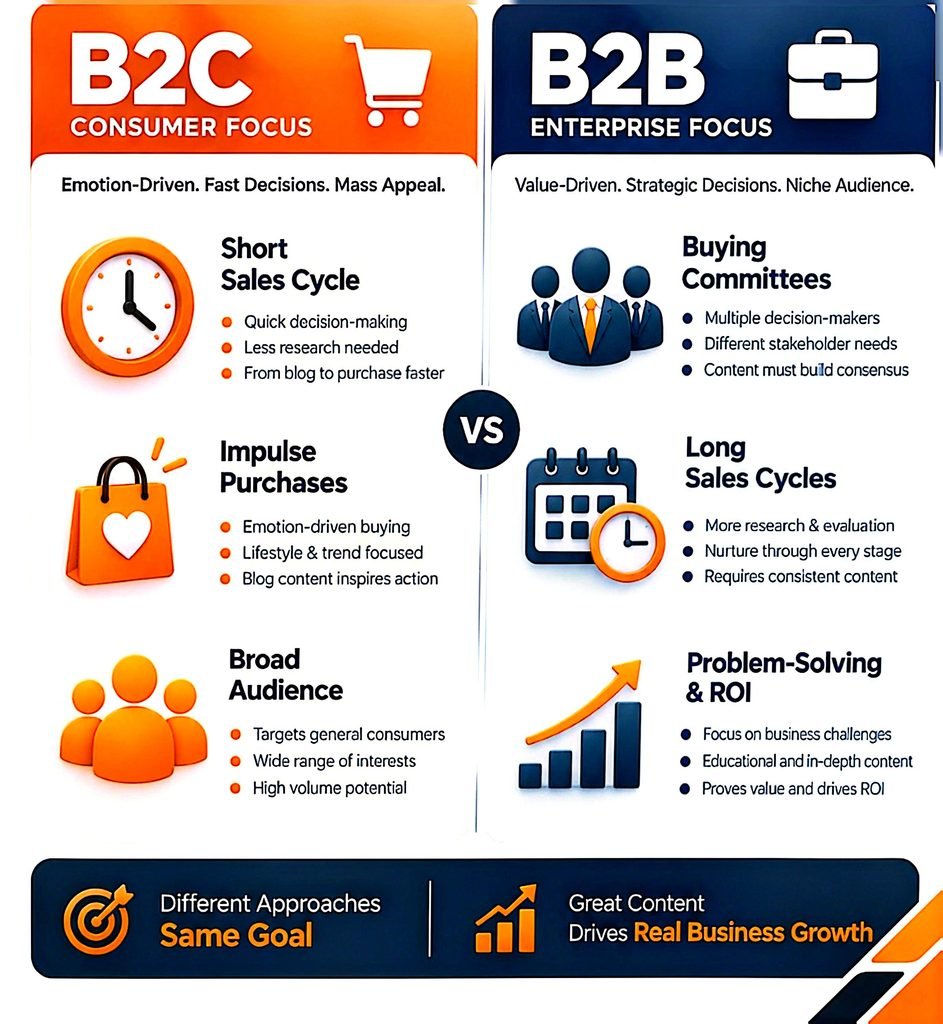
Infographic comparing B2C vs B2B marketing.

*Left - B2C Consumer Focus (orange header with shopping cart icon):*
Tagline: Emotion-Driven. Fast Decisions. Mass Appeal.
- *Short Sales Cycle:* Quick decision-making, Less research needed, From blog to purchase faster
- *Impulse Purchases:* Emotion-driven buying, Lifestyle & trend focused, Blog content inspires action
- *Broad Audience:* Targets general consumers, Wide range of interests, High volume potential

*Right - B2B Enterprise Focus (dark blue header with briefcase icon):*
Tagline: Value-Driven. Strategic Decisions. Niche Audience.
- *Buying Committees:* Multiple decision-makers, Different stakeholder needs, Content must build consensus
- *Long Sales Cycles:* More research & evaluation, Nurture through every stage, Requires consistent content
- *Problem-Solving & ROI:* Focus on business challenges, Educational and in-depth content, Proves value and drives ROI

Footer banner: "Different Approaches Same Goal | Great Content Drives Real Business Growth"

B2B vs. B2C Blogging: Key Differences

B2B buyer behavior differs significantly from consumer purchasing patterns. Understanding these structural differences ensures content strategy aligns with enterprise sales cycles.

FactorB2C BloggingB2B Marketing Blogging 
Target AudienceIndividual consumers making personal buying decisions.Buying committees, executives, and department heads.
Sales CycleShort (minutes, hours, or days).Extended (weeks, months, or quarters).
Content FocusEntertainment, lifestyle, trend-focused, and emotional triggers.Problem-solving, ROI, risk reduction, and operational efficiency.
Primary GoalImmediate e-commerce purchases or brand affinity.Lead qualification, consultative inquiries, and pipeline acceleration.
Content FormatsShort articles, visual guides, and product roundups.In-depth guides, technical breakdowns, whitepapers, and frameworks.
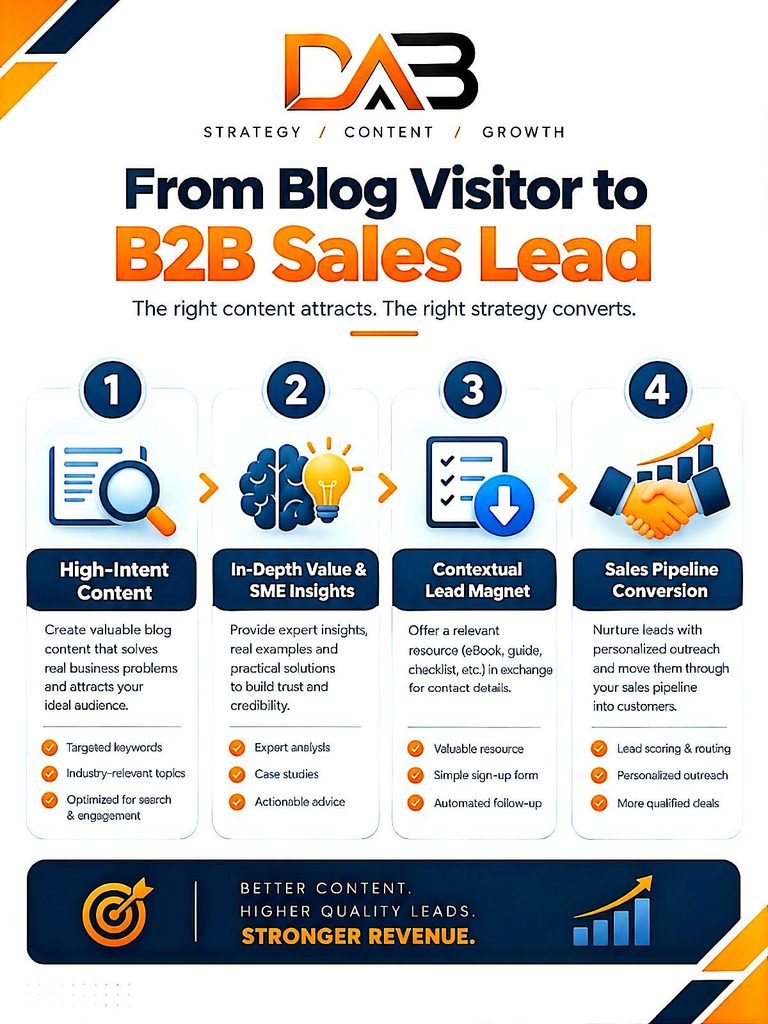
Infographic titled "From Blog Visitor to B2B Sales Lead" by DAB (Strategy / Content / Growth). Subtitle: "The right content attracts. The right strategy converts."

Four steps left to right:

*1. High-Intent Content*
Create valuable blog content that solves real business problems and attracts your ideal audience.
- Targeted keywords
- Industry-relevant topics
- Optimized for search & engagement

*2. In-Depth Value & SME Insights*
Provide expert insights, real examples and practical solutions to build trust and credibility.
- Expert analysis
- Case studies
- Actionable advice

*3. Contextual Lead Magnet*
Offer a relevant resource (eBook, guide, checklist, etc.) in exchange for contact details.
- Valuable resource
- Simple sign-up form
- Automated follow-up

*4. Sales Pipeline Conversion*
Nurture leads with personalized outreach and move them through your sales pipeline into customers.
- Lead scoring & routing
- Personalized outreach
- More qualified deals

Footer banner: "BETTER CONTENT. HIGHER QUALITY LEADS. STRONGER REVENUE."

10 Proven B2B Blog Strategies That Drive Qualified Leads

Generating high-value leads requires a structured content methodology. Implement these ten strategies to transform your blog into a dependable lead engine.

1. Target High-Intent “Bottom-of-Funnel” Topics First

While broad topics build awareness, high-intent keywords attract buyers actively seeking solutions. Focus on comparison articles, buyer guides, and specific software or service evaluation topics to capture decision-ready traffic.

2. Map Content directly to the Buyer Journey

Structure your editorial roadmap around the three primary buying stages:

  1. Awareness: Diagnosing operational symptoms and defining business problems.
  2. Consideration: Comparing different methodology types, service frameworks, and technological approaches.
  3. Decision: Evaluating vendor capabilities, ROI models, and implementation requirements.

3. Incorporate Subject Matter Expert (SME) Insights

Generic AI summaries fail to earn enterprise trust. Interview internal practitioners, engineers, and strategists to include original viewpoints, proprietary data, and real-world implementation nuances.

4. Leverage Strategic Content Marketing Frameworks

Publishing insightful articles is only half the battle. Implementing strategic content marketing for B2B ensures every piece of content integrates into lead magnets, email sequences, and outbound sales collateral.

5. Optimize for Answer Engine & Generative Search

Modern buyers rely on AI-assisted search tools to summarize vendors. Use clear H2/H3 structures, direct answer paragraphs, bulleted summaries, and schema markup to ensure AI engines reference your expertise.

6. Utilize Conversion-Focused Content Upgrades

Offer contextual lead magnets within top-performing articles. Replace generic newsletter signups with tailored resources like downloadable ROI calculators, implementation checklists, or benchmark reports.

7. Integrate Comprehensive Digital Solutions

A B2B blog achieves maximum impact when backed by full technical optimization and omni-channel promotion. Partnering with a results-driven digital marketing agency helps streamline technical SEO, user experience, and multi-channel acquisition paths.

8. Repurpose Core Insights Across Distribution Channels

Extract value from long-form blog posts by breaking them down into executive LinkedIn summaries, slide decks, newsletter features, and short video scripts for social platforms.

9. Align Content Creation with End-to-End Growth Services

To convert readership into pipeline revenue, coordinate blogging efforts with specialized B2B digital marketing solutions. This alignment connects organic blog traffic directly with paid retargeting and lead scoring systems.

10. Maintain an Audit and Content Refresh Cadence

B2B trends, technologies, and search algorithms evolve constantly. Review historical articles quarterly to update outdated statistics, refresh calls to action, and expand underperforming sections.

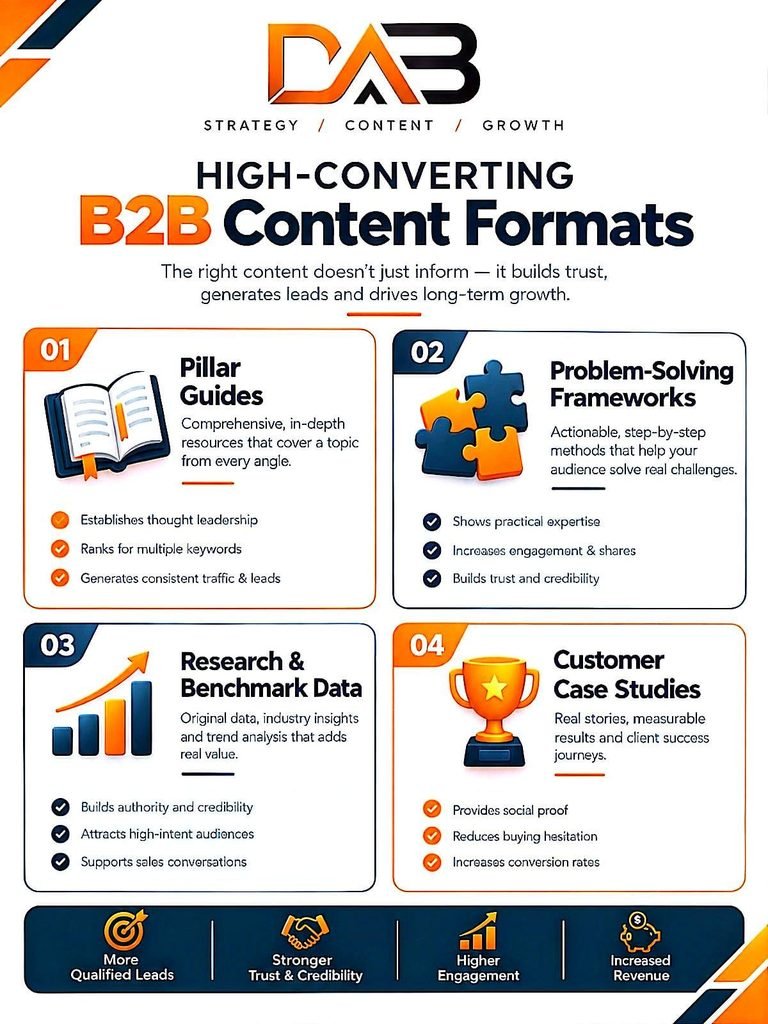
Infographic titled "HIGH-CONVERTING B2B Content Formats" by DAB (Strategy / Content / Growth). Subtitle: "The right content doesn't just inform — it builds trust, generates leads and drives long-term growth."

*01 Pillar Guides*
Comprehensive, in-depth resources that cover a topic from every angle.
- Establishes thought leadership
- Ranks for multiple keywords
- Generates consistent traffic & leads

*02 Problem-Solving Frameworks*
Actionable, step-by-step methods that help your audience solve real challenges.
- Shows practical expertise
- Increases engagement & shares
- Builds trust and credibility

*03 Research & Benchmark Data*
Original data, industry insights and trend analysis that adds real value.
- Builds authority and credibility
- Attracts high-intent audiences
- Supports sales conversations

*04 Customer Case Studies*
Real stories, measurable results and client success journeys.
- Provides social proof
- Reduces buying hesitation
- Increases conversion rates

Footer banner: More Qualified Leads | Stronger Trust & Credibility | Higher Engagement | Increased Revenue

How to Choose the Right B2B Content Themes

Selecting topic pillars that balance search demand with commercial relevance is critical. Focus on these core content types:

  • Pillar Guides & Ultimate Handbooks: Definitive overviews on foundational industry concepts.
  • Problem-Solution Frameworks: Step-by-step guides addressing specific operational hurdles.
  • Industry Benchmarks & Original Research: Data-driven reports based on client surveys or proprietary data.
  • Case Study Deep Dives: Detailed analyses highlighting client challenges, solutions, and measured outcomes.

Measuring B2B Blog Performance

Measuring B2B blog success goes beyond tracking pageviews and bounce rates. Monitor metrics that reflect genuine sales pipeline impact:

  • Organic Conversions: Form submissions, demo requests, and whitepaper downloads originating from blog sessions.
  • Content-Assisted Pipeline: First-touch and multi-touch attribution metrics showing blog interactions prior to deal creation.
  • Target Account Engagement: Traffic and time-on-page metrics from high-priority accounts and target verticals.
  • Search Position Velocity: Ranking improvements for core commercial and informational keywords.

Key Takeaways

  • A B2B marketing blog must prioritize business buyer pain points, ROI, and risk reduction over generic consumer topics.
  • High-intent, bottom-of-funnel topics capture prospective clients actively evaluating service and software providers.
  • Subject matter expertise and original data are essential for earning buyer trust and optimizing for AI-driven search engines.
  • Content distribution, lead capture upgrades, and continuous content refreshes drive long-term return on investment.

Frequently Asked Questions (FAQs)

What is the primary goal of a B2B marketing blog?

The primary goal of a B2B marketing blog is to attract qualified prospective clients, build industry authority, educate buyers throughout complex purchasing cycles, and generate measurable sales leads.

How often should a business publish on a B2B marketing blog?

Quality and depth take precedence over volume in B2B marketing. Publishing 2 to 4 thoroughly researched, highly strategic articles per month typically yields better pipeline results than publishing frequent, shallow content.

How long should B2B blog articles be?

B2B articles usually range between 1,200 and 2,500 words. Length should be determined by topic complexity, ensuring all buyer questions are comprehensively addressed without filler.

How do you generate leads from a B2B marketing blog?

Leads are generated by offering high-value contextual lead magnets (such as templates, ROI tools, or whitepapers), placing clear calls-to-action within content, and targeting high-intent buyer keywords.

What type of content performs best on a B2B blog?

High-performing B2B formats include tactical problem-solving guides, industry benchmark reports, deep-dive case studies, vendor comparison breakdowns, and subject-matter expert interviews.

How long does it take for a B2B blog to show SEO results?

Organic search results generally take 3 to 6 months to materialize, depending on domain authority, competitive keyword difficulty, technical website health, and promotional activity.

How do you measure ROI from a B2B marketing blog?

B2B blog ROI is measured by tracking lead generation volume, qualified pipeline contribution, customer acquisition costs (CAC), target account engagement, and revenue attribution model metrics.

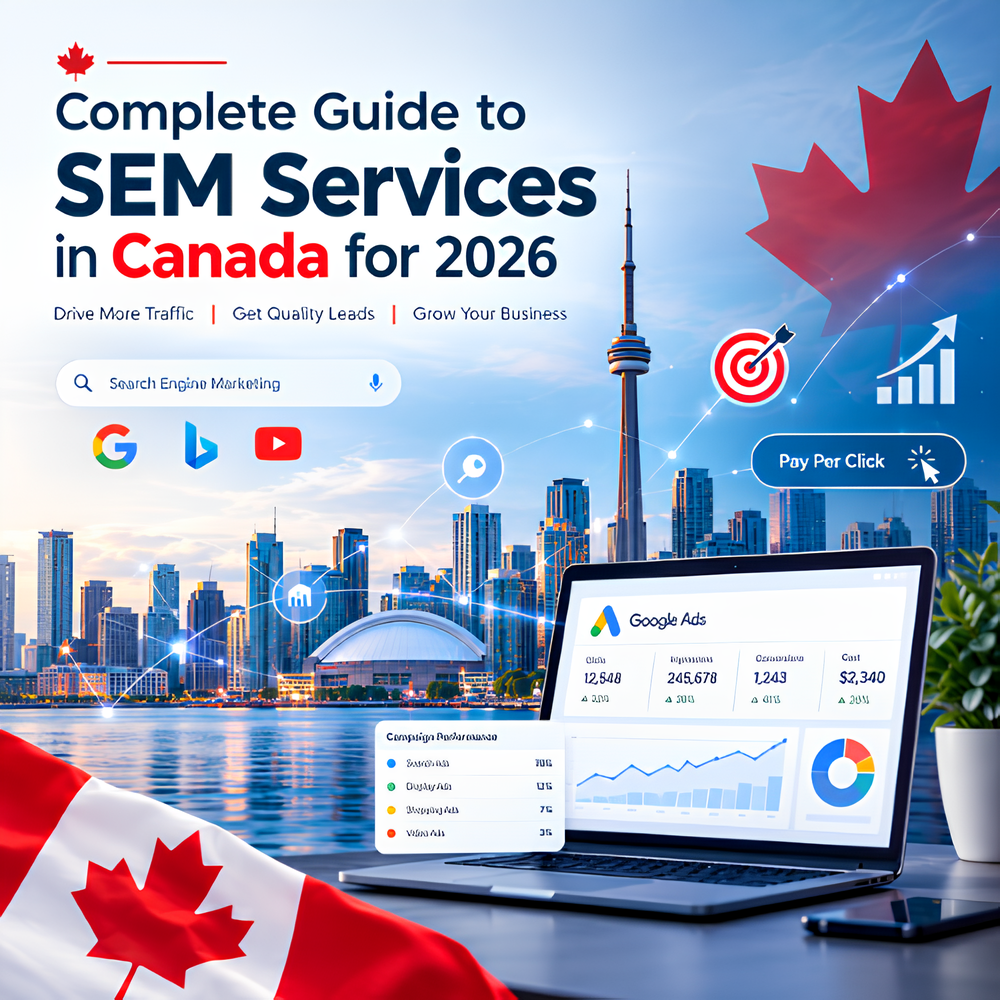
The Complete Guide to SEM Services in Canada for 2026

Navigating the Canadian digital commerce landscape requires precision, rapid execution, and granular budget allocation. Investing in enterprise grade SEM Services Canada offers local and national brands a direct, reliable pathway to capturing searchers with high commercial intent across competitive metropolitan hubs. Because organic algorithms evolve constantly, modern search engines prioritize paid search listings for high-converting transactional queries. Partnering with seasoned specialists for expert PPC and SEM management ensures that every ad dollar spent delivers maximum impression share, optimal click-through rates (CTR), and sustainable return on ad spend (ROAS). This comprehensive guide explores data-backed search engine marketing frameworks tailored for Canadian businesses navigating the 2026 search ecosystem.

Understanding Search Engine Marketing in Canada (2026 Landscape)

Search Engine Marketing (SEM) encompasses paid search advertising strategies designed to secure immediate top-of-page visibility on search engine results pages (SERPs). Unlike traditional inbound strategies that require months of organic domain authority building, SEM allows organizations to target users at the exact moment they express intent to purchase or hire.

In Canada, Google commands approximately 91.8% of the search engine market share, while Microsoft Advertising (Bing) holds roughly 5.4%, catering heavily to desktop users and B2B corporate decision-makers. Modern Canadian search marketing leverages advanced machine learning, audience signals, demographic overlays, and location parameters to place hyper-relevant search ads in front of targeted consumers.

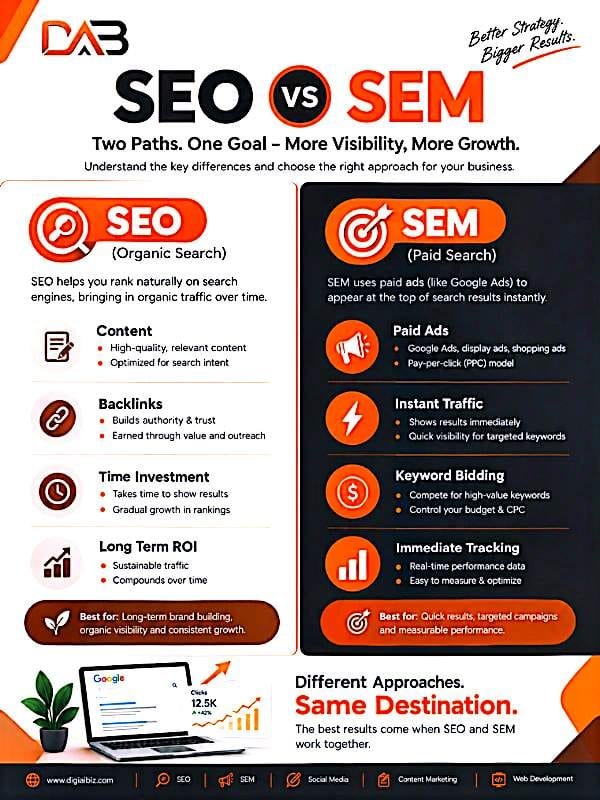
SEM vs SEO: How Paid and Organic Search Work Together

Canadian business leaders often deliberate over whether to allocate capital toward organic search engine optimization or paid keyword campaigns. However, top-performing digital brands utilize an integrated search strategy that combines both approaches to dominate maximum SERP real estate.

  • Search Engine Optimization (SEO): Builds scalable, long-term non-paid traffic by optimizing site architecture, technical performance, and authoritative topical clusters.
  • Search Engine Marketing (SEM): Delivers instantaneous top-tier visibility using real-time auction keyword bidding, dynamic ad copy extensions, and targeted sponsored search placements.

By coordinating Organic and paid search services, Canadian brands gain crucial performance synergies. High-performing paid search keywords can be integrated into organic content roadmaps, while organic top-ranking pages reduce reliance on expensive ad auctions for broader informational queries.

Key Advantages of SEM Services for Canadian Brands

The Canadian commercial market presents unique operational characteristics, including significant geographic dispersion, distinct regional economies, and formal federal bilingualism mandates. Tailored SEM strategies address these complexities directly:

  1. Immediate Market Presence and Rapid Validation: Newly launched products or regional service locations can achieve top SERP positioning within hours of campaign configuration, enabling rapid testing of pricing models and promotional landing pages.
  2. Granular Geofencing and Regional Segmentation: Advertisers can define hyper-targeted geographic radiuses around specific postal codes, municipal zones, or commercial centers in major cities like Toronto, Vancouver, Calgary, Montreal, and Ottawa.
  3. Native Bilingual Campaign Execution: To succeed across provinces like Quebec, New Brunswick, or eastern Ontario, campaigns can be segmented with dedicated French-language ad copy, native localized keywords, and dedicated French landing pages, improving overall Quality Scores.
  4. Deterministic Revenue Measurement and CRM Attribution: Track every inbound phone call, contact form fill, and e-commerce transaction back to specific campaign structures, match types, ad variations, and individual bidding strategies.

Core Components of a High-Yield Canadian SEM Strategy

Building profitable Google Ads and Bing campaigns demands rigorous technical planning, continual ad copy testing, and strict negative keyword filtering. Below are the core pillars of an enterprise-level campaign architecture.

1. Strategic Keyword Research, Match Types, and Commercial Intent

Profitable search advertising relies on isolating high-intent keywords while systematically filtering out non-converting search traffic. Strategists classify intent into structured tiers:

  • Commercial and High-Transaction Intent: Specific search queries indicating immediate purchasing readiness, such as “commercial movers Toronto price”, “B2B accounting firm Vancouver”, or “buy enterprise software online Canada”.
  • Informational Intent Filtering: Broader search terms like “how to calculate moving costs” or “what is accounting software” are typically redirected toward organic SEO content or targeted with lower-bid top-of-funnel ad campaigns.
  • Negative Keyword Management: Applying robust, cross-campaign negative keyword lists (filtering words like “free”, “jobs”, “careers”, “DIY”, “courses”) ensures ad spend is never wasted on unqualified impressions.

2. Account Structure and Bidding Strategy Matrix

Maintaining a clean account hierarchy prevents keyword cannibalization, improves ad relevance, and drives up Google’s Quality Score metric (rated on a 1–10 scale). Higher Quality Scores directly lower the average Cost Per Click (CPC) and improve ad positioning during live SERP auctions.

Selecting the optimal bidding strategy depends on historical conversion data, campaign objectives, and margin structures:

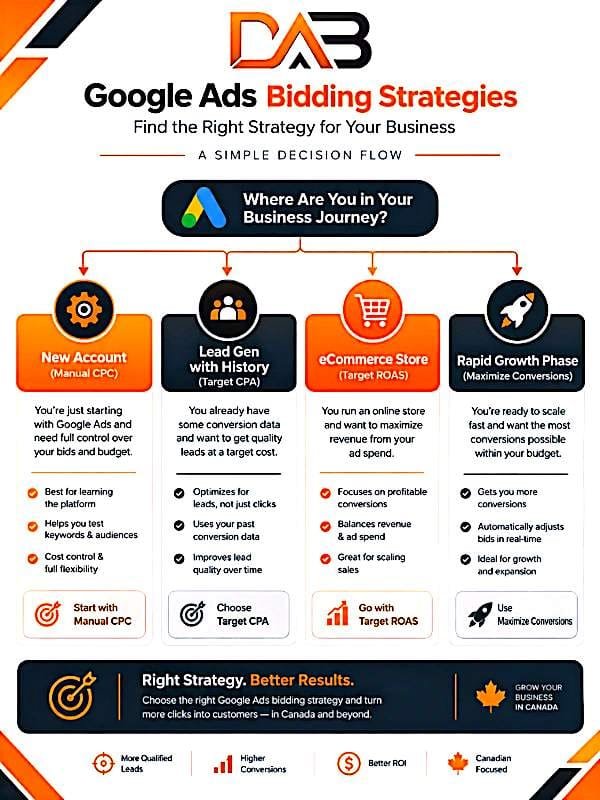
Bidding StrategyPrimary MechanicsIdeal Canadian Business Use Case 
Manual CPC / Enhanced CPCOffers complete manual control over individual keyword bid ceilings.New ad accounts or specialized niche markets with limited baseline conversion data.
Target CPA (Cost Per Acquisition)Uses machine learning algorithms to secure conversions at or below a set dollar target.Established B2B and professional service lead generation campaigns with steady monthly leads.
Target ROAS (Return on Ad Spend)Automatically adjusts keyword bids to maximize total revenue relative to ad budget spent.E-commerce businesses managing multi-category inventories with varying profit margins.
Maximize ConversionsDeploys full daily budget to capture the highest possible volume of conversion actions.Time-sensitive promotional offers, seasonal spikes, or high-budget brand launches.

Modern SEM Considerations for 2026: AI, AEO, and GEO Integration

The search ecosystem in 2026 relies heavily on Artificial Intelligence, Answer Engine Optimization (AEO), and Generative Engine Optimization (GEO). Search engines increasingly synthesize direct answer summaries alongside conventional sponsored ad listings.

To remain competitive in 2026, PPC managers must adapt their assets for AI-driven search experiences:

  • Responsive Search Ads (RSAs) Optimization: Providing Google’s machine learning models with 15 distinct headline options and 4 rich description variants ensures optimal headline-description combinations for varying user intents.
  • First-Party Data Integration: Uploading offline CRM data, customer match lists, and lifecycle values allows Google AI algorithms to optimize bids specifically toward high-value ideal customer profiles (ICPs).
  • AEO-Friendly Search Assets: Leveraging structured search snippets, sitelinks, callouts, structured snippets, and image extensions increases the total visual footprint of your ad on mobile and AI-enhanced desktop SERPs. Partnering with verified Top Digital Marketing experts in Canada helps brands navigate automated Smart Bidding, Performance Max campaigns, and generative AI search changes smoothly.

Cost Benchmarks, Budgeting, and Conversion Tracking in Canada

Developing an effective SEM budget requires analyzing industry competition, geographic market size, and customer lifetime value (LTV). Across Canada, average Cost Per Click (CPC) ranges vary widely by sector:

  • Legal, Financial, and Insurance Services: $12.00 to $45.00+ per click (highly competitive, high LTV).
  • Home Services and Local Trades: $6.00 to $18.00 per click.
  • E-commerce and Retail Products: $1.50 to $5.00 per click.
  • B2B Software and Tech Services: $8.00 to $25.00 per click.

Setting up conversion tracking through official platforms like Google Ads official resources and Google Search official documentation is essential to ensure accurate campaign attribution. Recommended tracking protocols include:

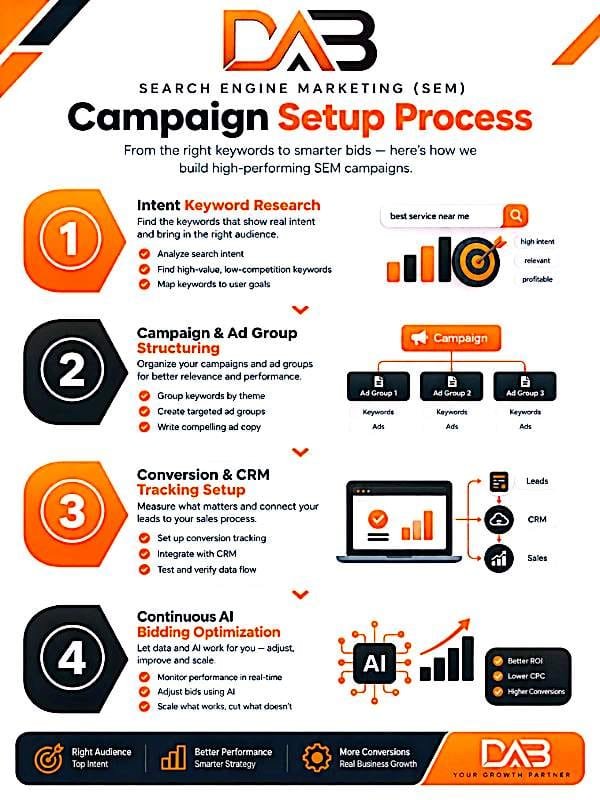
  1. Primary Conversion Setup: Implement Google Tag Manager (GTM) triggers for completed checkouts, form submissions, and direct email contacts.
  2. Server-Side Tagging & Enhanced Conversions: Utilize server-side measurement protocols to overcome data loss caused by ad-blocking technology and browser privacy updates.
  3. Dynamic Call Tracking: Integrate dynamic number insertion (DNI) to attribute phone calls back to specific campaigns, ads, and search keywords.
  4. Offline CRM Conversion Imports: Feed qualified lead and sales revenue data from CRMs like Salesforce or HubSpot back into Google Ads to train bidding algorithms on closed revenue rather than raw lead volume.

Key Takeaways

  • SEM Services in Canada provide instant high-intent visibility, granular regional geofencing, and native bilingual campaign capabilities.
  • Combining organic SEO with paid SEM maximizes overall search engine real estate and builds brand trust.
  • Advanced AI-driven bidding, first-party CRM data feeds, and AEO asset enhancements are essential for campaign profitability in 2026.
  • Continuous negative keyword filtering and server-side conversion tracking prevent wasted spend and preserve high Quality Scores.

Frequently Asked Questions

What is the core difference between SEO and SEM?

SEO focuses on securing non-paid organic traffic over time through technical site updates and content building. SEM uses direct auction bidding to place targeted paid advertisements at the top of search engine results pages instantly.

How much do SEM services cost in Canada?

Total SEM costs consist of direct ad spend paid to search platforms plus agency management fees. Most Canadian SMBs allocate between $2,000 and $15,000 monthly in ad spend, while enterprise brands often spend $20,000 to $100,000+ per month depending on competitive scope.

How quickly can an enterprise expect results from an SEM campaign?

Unlike organic strategies that require months to mature, SEM campaigns begin generating targeted search traffic, phone calls, and web conversions as soon as ads pass editorial review and launch live.

Is Google Ads the only search network used for Canadian SEM?

While Google Ads handles over 90% of Canadian search volume, Microsoft Advertising (Bing) is an effective secondary channel, offering lower CPCs and reaching affluent B2B corporate demographics.

How do bilingual campaigns work in Canadian search advertising?

Bilingual campaigns require separate ad groups, unique French keywords, localized ad copy, and native French landing pages to ensure strong Quality Scores and clear user relevance across provinces like Quebec.

What constitutes a strong Quality Score in Google Ads?

A Quality Score between 7 and 10 is considered strong. Achieving high Quality Scores reduces your effective Cost Per Click (CPC) and earns superior ad positions over competitors bidding similar amounts.

Why is server-side conversion tracking necessary for modern SEM?

Server-side conversion tracking sends conversion events directly from your web server to search ad networks, bypassing client-side ad blockers and browser privacy restrictions to ensure accurate bidding data.