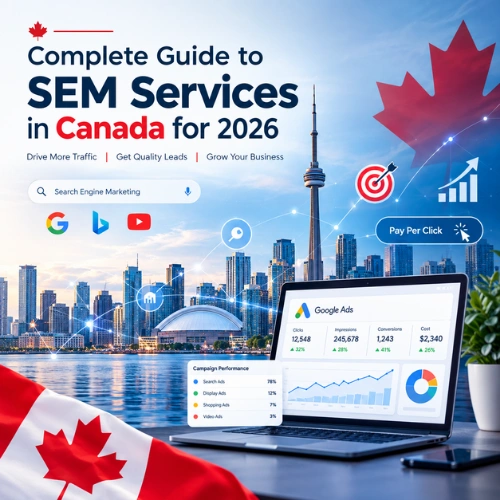
Navigating the Canadian digital commerce landscape requires precision, rapid execution, and granular budget allocation. Investing in enterprise grade SEM Services Canada offers local and national brands a direct, reliable pathway to capturing searchers with high commercial intent across competitive metropolitan hubs. Because organic algorithms evolve constantly, modern search engines prioritize paid search listings for high-converting transactional queries. Partnering with seasoned specialists for expert PPC and SEM management ensures that every ad dollar spent delivers maximum impression share, optimal click-through rates (CTR), and sustainable return on ad spend (ROAS). This comprehensive guide explores data-backed search engine marketing frameworks tailored for Canadian businesses navigating the 2026 search ecosystem.
Understanding Search Engine Marketing in Canada (2026 Landscape)
Search Engine Marketing (SEM) encompasses paid search advertising strategies designed to secure immediate top-of-page visibility on search engine results pages (SERPs). Unlike traditional inbound strategies that require months of organic domain authority building, SEM allows organizations to target users at the exact moment they express intent to purchase or hire.
In Canada, Google commands approximately 91.8% of the search engine market share, while Microsoft Advertising (Bing) holds roughly 5.4%, catering heavily to desktop users and B2B corporate decision-makers. Modern Canadian search marketing leverages advanced machine learning, audience signals, demographic overlays, and location parameters to place hyper-relevant search ads in front of targeted consumers.
SEM vs SEO: How Paid and Organic Search Work Together
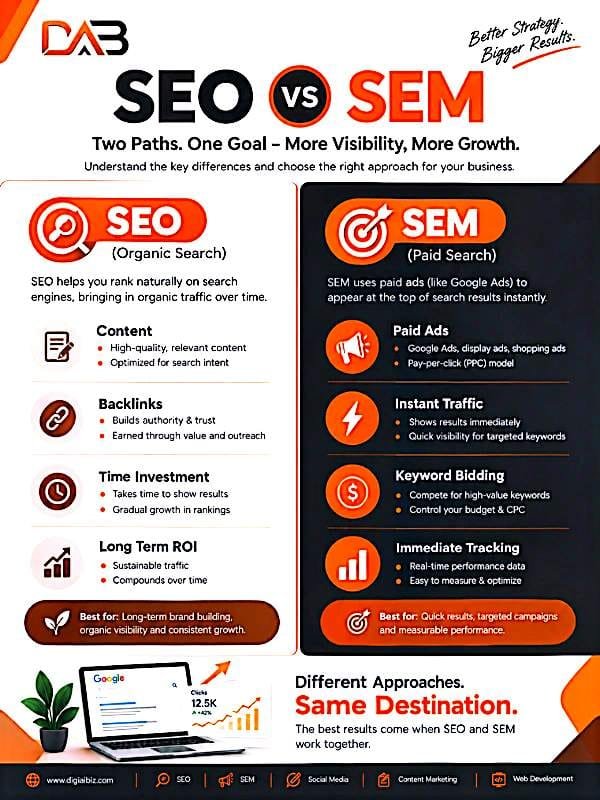
Canadian business leaders often deliberate over whether to allocate capital toward organic search engine optimization or paid keyword campaigns. However, top-performing digital brands utilize an integrated search strategy that combines both approaches to dominate maximum SERP real estate.
- Search Engine Optimization (SEO): Builds scalable, long-term non-paid traffic by optimizing site architecture, technical performance, and authoritative topical clusters.
- Search Engine Marketing (SEM): Delivers instantaneous top-tier visibility using real-time auction keyword bidding, dynamic ad copy extensions, and targeted sponsored search placements.
By coordinating Organic and paid search services, Canadian brands gain crucial performance synergies. High-performing paid search keywords can be integrated into organic content roadmaps, while organic top-ranking pages reduce reliance on expensive ad auctions for broader informational queries.
Key Advantages of SEM Services for Canadian Brands
The Canadian commercial market presents unique operational characteristics, including significant geographic dispersion, distinct regional economies, and formal federal bilingualism mandates. Tailored SEM strategies address these complexities directly:
- Immediate Market Presence and Rapid Validation: Newly launched products or regional service locations can achieve top SERP positioning within hours of campaign configuration, enabling rapid testing of pricing models and promotional landing pages.
- Granular Geofencing and Regional Segmentation: Advertisers can define hyper-targeted geographic radiuses around specific postal codes, municipal zones, or commercial centers in major cities like Toronto, Vancouver, Calgary, Montreal, and Ottawa.
- Native Bilingual Campaign Execution: To succeed across provinces like Quebec, New Brunswick, or eastern Ontario, campaigns can be segmented with dedicated French-language ad copy, native localized keywords, and dedicated French landing pages, improving overall Quality Scores.
- Deterministic Revenue Measurement and CRM Attribution: Track every inbound phone call, contact form fill, and e-commerce transaction back to specific campaign structures, match types, ad variations, and individual bidding strategies.
Core Components of a High-Yield Canadian SEM Strategy
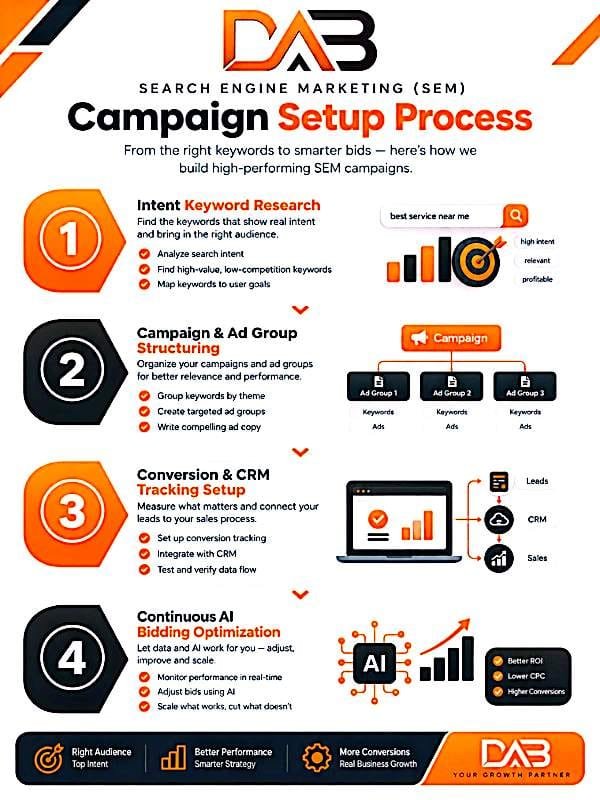
Building profitable Google Ads and Bing campaigns demands rigorous technical planning, continual ad copy testing, and strict negative keyword filtering. Below are the core pillars of an enterprise-level campaign architecture.
1. Strategic Keyword Research, Match Types, and Commercial Intent
Profitable search advertising relies on isolating high-intent keywords while systematically filtering out non-converting search traffic. Strategists classify intent into structured tiers:
- Commercial and High-Transaction Intent: Specific search queries indicating immediate purchasing readiness, such as “commercial movers Toronto price”, “B2B accounting firm Vancouver”, or “buy enterprise software online Canada”.
- Informational Intent Filtering: Broader search terms like “how to calculate moving costs” or “what is accounting software” are typically redirected toward organic SEO content or targeted with lower-bid top-of-funnel ad campaigns.
- Negative Keyword Management: Applying robust, cross-campaign negative keyword lists (filtering words like “free”, “jobs”, “careers”, “DIY”, “courses”) ensures ad spend is never wasted on unqualified impressions.
2. Account Structure and Bidding Strategy Matrix
Maintaining a clean account hierarchy prevents keyword cannibalization, improves ad relevance, and drives up Google’s Quality Score metric (rated on a 1–10 scale). Higher Quality Scores directly lower the average Cost Per Click (CPC) and improve ad positioning during live SERP auctions.
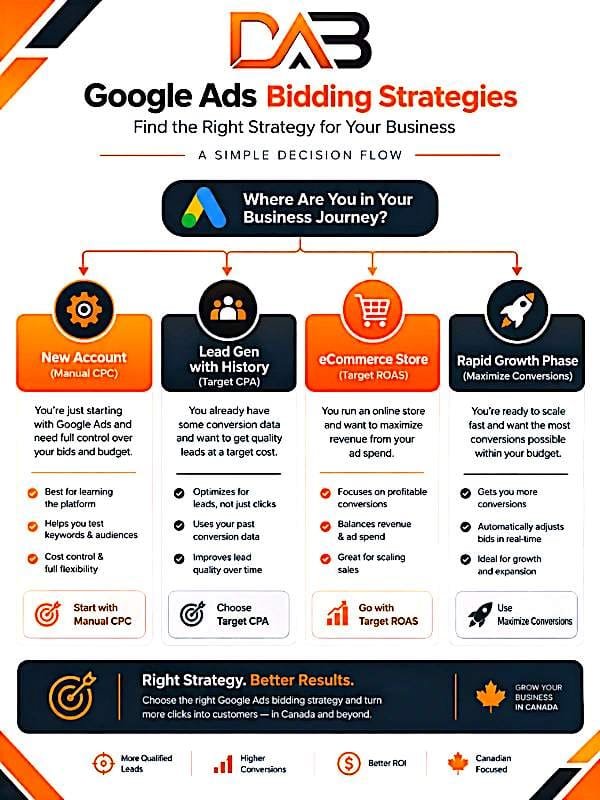
Selecting the optimal bidding strategy depends on historical conversion data, campaign objectives, and margin structures:
| Bidding Strategy | Primary Mechanics | Ideal Canadian Business Use Case |
|---|---|---|
| Manual CPC / Enhanced CPC | Offers complete manual control over individual keyword bid ceilings. | New ad accounts or specialized niche markets with limited baseline conversion data. |
| Target CPA (Cost Per Acquisition) | Uses machine learning algorithms to secure conversions at or below a set dollar target. | Established B2B and professional service lead generation campaigns with steady monthly leads. |
| Target ROAS (Return on Ad Spend) | Automatically adjusts keyword bids to maximize total revenue relative to ad budget spent. | E-commerce businesses managing multi-category inventories with varying profit margins. |
| Maximize Conversions | Deploys full daily budget to capture the highest possible volume of conversion actions. | Time-sensitive promotional offers, seasonal spikes, or high-budget brand launches. |
Modern SEM Considerations for 2026: AI, AEO, and GEO Integration
The search ecosystem in 2026 relies heavily on Artificial Intelligence, Answer Engine Optimization (AEO), and Generative Engine Optimization (GEO). Search engines increasingly synthesize direct answer summaries alongside conventional sponsored ad listings.
To remain competitive in 2026, PPC managers must adapt their assets for AI-driven search experiences:
- Responsive Search Ads (RSAs) Optimization: Providing Google’s machine learning models with 15 distinct headline options and 4 rich description variants ensures optimal headline-description combinations for varying user intents.
- First-Party Data Integration: Uploading offline CRM data, customer match lists, and lifecycle values allows Google AI algorithms to optimize bids specifically toward high-value ideal customer profiles (ICPs).
- AEO-Friendly Search Assets: Leveraging structured search snippets, sitelinks, callouts, structured snippets, and image extensions increases the total visual footprint of your ad on mobile and AI-enhanced desktop SERPs. Partnering with verified Top Digital Marketing experts in Canada helps brands navigate automated Smart Bidding, Performance Max campaigns, and generative AI search changes smoothly.
Cost Benchmarks, Budgeting, and Conversion Tracking in Canada
Developing an effective SEM budget requires analyzing industry competition, geographic market size, and customer lifetime value (LTV). Across Canada, average Cost Per Click (CPC) ranges vary widely by sector:
- Legal, Financial, and Insurance Services: $12.00 to $45.00+ per click (highly competitive, high LTV).
- Home Services and Local Trades: $6.00 to $18.00 per click.
- E-commerce and Retail Products: $1.50 to $5.00 per click.
- B2B Software and Tech Services: $8.00 to $25.00 per click.
Setting up conversion tracking through official platforms like Google Ads official resources and Google Search official documentation is essential to ensure accurate campaign attribution. Recommended tracking protocols include:
- Primary Conversion Setup: Implement Google Tag Manager (GTM) triggers for completed checkouts, form submissions, and direct email contacts.
- Server-Side Tagging & Enhanced Conversions: Utilize server-side measurement protocols to overcome data loss caused by ad-blocking technology and browser privacy updates.
- Dynamic Call Tracking: Integrate dynamic number insertion (DNI) to attribute phone calls back to specific campaigns, ads, and search keywords.
- Offline CRM Conversion Imports: Feed qualified lead and sales revenue data from CRMs like Salesforce or HubSpot back into Google Ads to train bidding algorithms on closed revenue rather than raw lead volume.
Key Takeaways
- SEM Services in Canada provide instant high-intent visibility, granular regional geofencing, and native bilingual campaign capabilities.
- Combining organic SEO with paid SEM maximizes overall search engine real estate and builds brand trust.
- Advanced AI-driven bidding, first-party CRM data feeds, and AEO asset enhancements are essential for campaign profitability in 2026.
- Continuous negative keyword filtering and server-side conversion tracking prevent wasted spend and preserve high Quality Scores.
Frequently Asked Questions
What is the core difference between SEO and SEM?
SEO focuses on securing non-paid organic traffic over time through technical site updates and content building. SEM uses direct auction bidding to place targeted paid advertisements at the top of search engine results pages instantly.
How much do SEM services cost in Canada?
Total SEM costs consist of direct ad spend paid to search platforms plus agency management fees. Most Canadian SMBs allocate between $2,000 and $15,000 monthly in ad spend, while enterprise brands often spend $20,000 to $100,000+ per month depending on competitive scope.
How quickly can an enterprise expect results from an SEM campaign?
Unlike organic strategies that require months to mature, SEM campaigns begin generating targeted search traffic, phone calls, and web conversions as soon as ads pass editorial review and launch live.
Is Google Ads the only search network used for Canadian SEM?
While Google Ads handles over 90% of Canadian search volume, Microsoft Advertising (Bing) is an effective secondary channel, offering lower CPCs and reaching affluent B2B corporate demographics.
How do bilingual campaigns work in Canadian search advertising?
Bilingual campaigns require separate ad groups, unique French keywords, localized ad copy, and native French landing pages to ensure strong Quality Scores and clear user relevance across provinces like Quebec.
What constitutes a strong Quality Score in Google Ads?
A Quality Score between 7 and 10 is considered strong. Achieving high Quality Scores reduces your effective Cost Per Click (CPC) and earns superior ad positions over competitors bidding similar amounts.
Why is server-side conversion tracking necessary for modern SEM?
Server-side conversion tracking sends conversion events directly from your web server to search ad networks, bypassing client-side ad blockers and browser privacy restrictions to ensure accurate bidding data.