B2B Marketing Blog: Proven Strategies That Generate Real Leads

Building a successful B2B marketing blog requires moving past generic industry updates and focusing directly on buyer intent and business value. Modern business decision-makers demand in-depth insights, actionable solutions, and clear proof before engaging with sales teams. Companies that align their blogging strategy with actual decision-maker pain points consistently turn organic traffic into qualified leads. This guide explores proven frameworks for creating, distributing, and optimizing B2B content that drives measurable sales pipeline growth.
What Is a B2B Marketing Blog and Why Does It Matter?
A B2B (business-to-business) marketing blog is an informational publishing asset designed to educate prospective enterprise clients, address operational challenges, and demonstrate industry authority. Unlike consumer-focused blogging that targets fast transactional purchases, B2B content targets multi-stakeholder buying committees evaluating complex, high-value investments.
Core functions of a B2B blog include:
- Educating Buyers: Clarifying complex industry trends, regulatory changes, and technical solutions.
- Building Authority: Demonstrating subject matter expertise through case studies, original insights, and frameworks.
- Supporting Search Visibility: Capturing high-intent organic search queries across different stages of the buyer journey.
- Nurturing Leads: Providing sales teams with valuable collateral to answer client questions during long sales cycles.
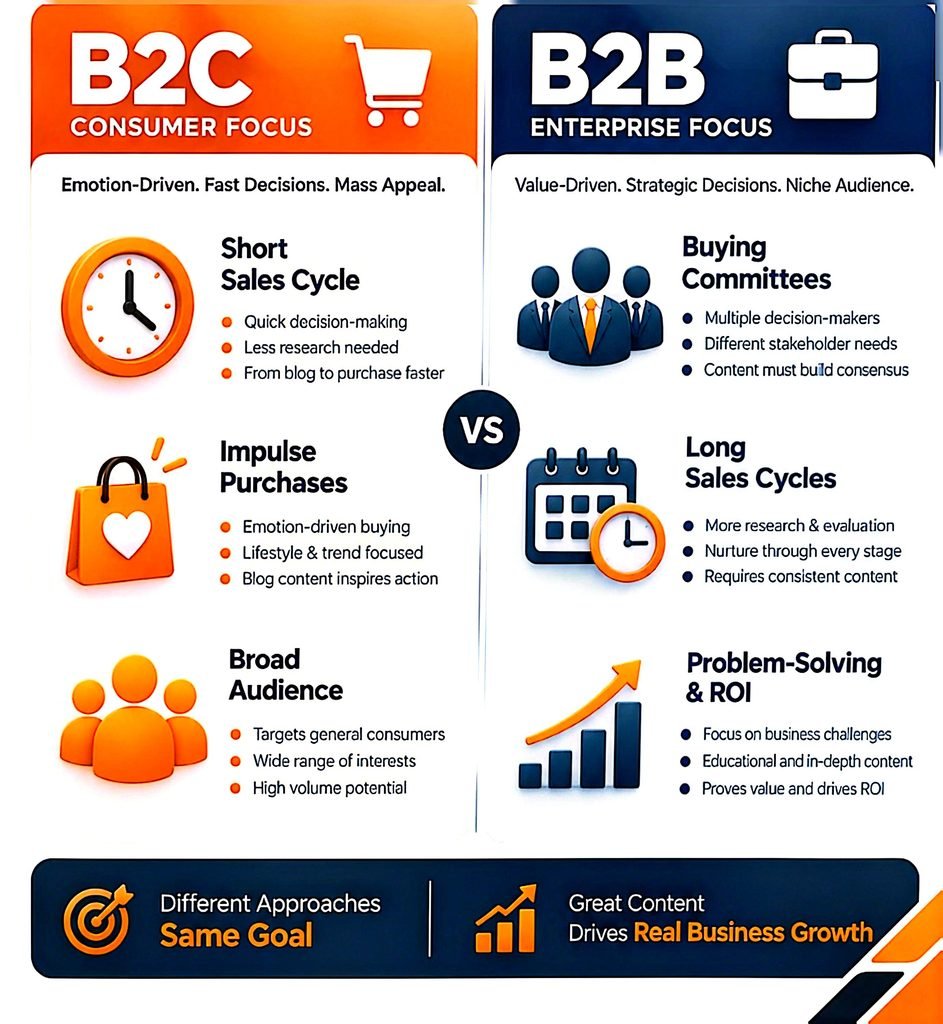
B2B vs. B2C Blogging: Key Differences
B2B buyer behavior differs significantly from consumer purchasing patterns. Understanding these structural differences ensures content strategy aligns with enterprise sales cycles.
| Factor | B2C Blogging | B2B Marketing Blogging |
|---|---|---|
| Target Audience | Individual consumers making personal buying decisions. | Buying committees, executives, and department heads. |
| Sales Cycle | Short (minutes, hours, or days). | Extended (weeks, months, or quarters). |
| Content Focus | Entertainment, lifestyle, trend-focused, and emotional triggers. | Problem-solving, ROI, risk reduction, and operational efficiency. |
| Primary Goal | Immediate e-commerce purchases or brand affinity. | Lead qualification, consultative inquiries, and pipeline acceleration. |
| Content Formats | Short articles, visual guides, and product roundups. | In-depth guides, technical breakdowns, whitepapers, and frameworks. |
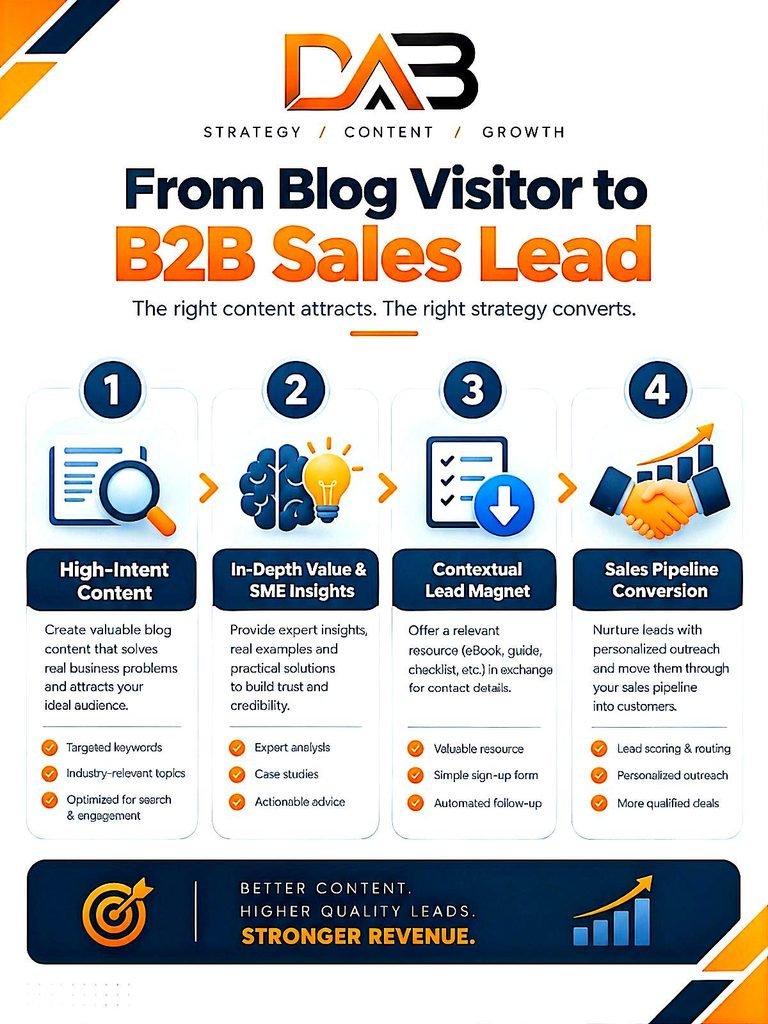
10 Proven B2B Blog Strategies That Drive Qualified Leads
Generating high-value leads requires a structured content methodology. Implement these ten strategies to transform your blog into a dependable lead engine.
1. Target High-Intent “Bottom-of-Funnel” Topics First
While broad topics build awareness, high-intent keywords attract buyers actively seeking solutions. Focus on comparison articles, buyer guides, and specific software or service evaluation topics to capture decision-ready traffic.
2. Map Content directly to the Buyer Journey
Structure your editorial roadmap around the three primary buying stages:
- Awareness: Diagnosing operational symptoms and defining business problems.
- Consideration: Comparing different methodology types, service frameworks, and technological approaches.
- Decision: Evaluating vendor capabilities, ROI models, and implementation requirements.
3. Incorporate Subject Matter Expert (SME) Insights
Generic AI summaries fail to earn enterprise trust. Interview internal practitioners, engineers, and strategists to include original viewpoints, proprietary data, and real-world implementation nuances.
4. Leverage Strategic Content Marketing Frameworks
Publishing insightful articles is only half the battle. Implementing strategic content marketing for B2B ensures every piece of content integrates into lead magnets, email sequences, and outbound sales collateral.
5. Optimize for Answer Engine & Generative Search
Modern buyers rely on AI-assisted search tools to summarize vendors. Use clear H2/H3 structures, direct answer paragraphs, bulleted summaries, and schema markup to ensure AI engines reference your expertise.
6. Utilize Conversion-Focused Content Upgrades
Offer contextual lead magnets within top-performing articles. Replace generic newsletter signups with tailored resources like downloadable ROI calculators, implementation checklists, or benchmark reports.
7. Integrate Comprehensive Digital Solutions
A B2B blog achieves maximum impact when backed by full technical optimization and omni-channel promotion. Partnering with a results-driven digital marketing agency helps streamline technical SEO, user experience, and multi-channel acquisition paths.
8. Repurpose Core Insights Across Distribution Channels
Extract value from long-form blog posts by breaking them down into executive LinkedIn summaries, slide decks, newsletter features, and short video scripts for social platforms.
9. Align Content Creation with End-to-End Growth Services
To convert readership into pipeline revenue, coordinate blogging efforts with specialized B2B digital marketing solutions. This alignment connects organic blog traffic directly with paid retargeting and lead scoring systems.
10. Maintain an Audit and Content Refresh Cadence
B2B trends, technologies, and search algorithms evolve constantly. Review historical articles quarterly to update outdated statistics, refresh calls to action, and expand underperforming sections.
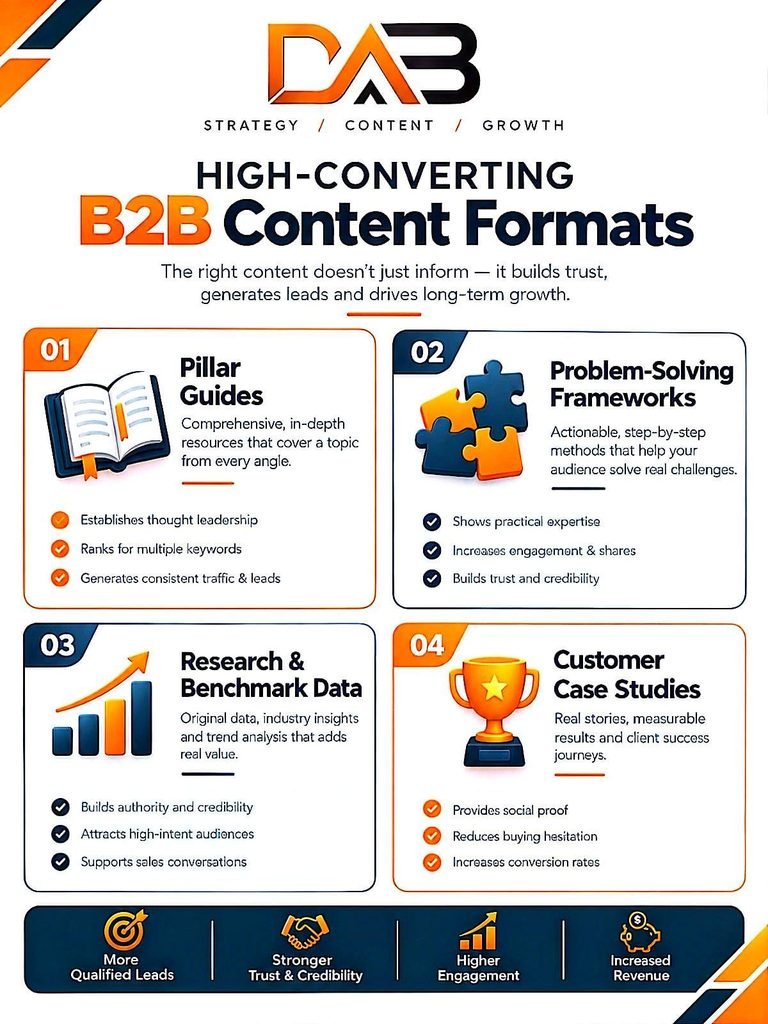
How to Choose the Right B2B Content Themes
Selecting topic pillars that balance search demand with commercial relevance is critical. Focus on these core content types:
- Pillar Guides & Ultimate Handbooks: Definitive overviews on foundational industry concepts.
- Problem-Solution Frameworks: Step-by-step guides addressing specific operational hurdles.
- Industry Benchmarks & Original Research: Data-driven reports based on client surveys or proprietary data.
- Case Study Deep Dives: Detailed analyses highlighting client challenges, solutions, and measured outcomes.
Measuring B2B Blog Performance
Measuring B2B blog success goes beyond tracking pageviews and bounce rates. Monitor metrics that reflect genuine sales pipeline impact:
- Organic Conversions: Form submissions, demo requests, and whitepaper downloads originating from blog sessions.
- Content-Assisted Pipeline: First-touch and multi-touch attribution metrics showing blog interactions prior to deal creation.
- Target Account Engagement: Traffic and time-on-page metrics from high-priority accounts and target verticals.
- Search Position Velocity: Ranking improvements for core commercial and informational keywords.
Key Takeaways
- A B2B marketing blog must prioritize business buyer pain points, ROI, and risk reduction over generic consumer topics.
- High-intent, bottom-of-funnel topics capture prospective clients actively evaluating service and software providers.
- Subject matter expertise and original data are essential for earning buyer trust and optimizing for AI-driven search engines.
- Content distribution, lead capture upgrades, and continuous content refreshes drive long-term return on investment.
Frequently Asked Questions (FAQs)
What is the primary goal of a B2B marketing blog?
The primary goal of a B2B marketing blog is to attract qualified prospective clients, build industry authority, educate buyers throughout complex purchasing cycles, and generate measurable sales leads.
How often should a business publish on a B2B marketing blog?
Quality and depth take precedence over volume in B2B marketing. Publishing 2 to 4 thoroughly researched, highly strategic articles per month typically yields better pipeline results than publishing frequent, shallow content.
How long should B2B blog articles be?
B2B articles usually range between 1,200 and 2,500 words. Length should be determined by topic complexity, ensuring all buyer questions are comprehensively addressed without filler.
How do you generate leads from a B2B marketing blog?
Leads are generated by offering high-value contextual lead magnets (such as templates, ROI tools, or whitepapers), placing clear calls-to-action within content, and targeting high-intent buyer keywords.
What type of content performs best on a B2B blog?
High-performing B2B formats include tactical problem-solving guides, industry benchmark reports, deep-dive case studies, vendor comparison breakdowns, and subject-matter expert interviews.
How long does it take for a B2B blog to show SEO results?
Organic search results generally take 3 to 6 months to materialize, depending on domain authority, competitive keyword difficulty, technical website health, and promotional activity.
How do you measure ROI from a B2B marketing blog?
B2B blog ROI is measured by tracking lead generation volume, qualified pipeline contribution, customer acquisition costs (CAC), target account engagement, and revenue attribution model metrics.